Organic Greek Extra Virgin Olive Oil (500ml/16.9 fl oz)

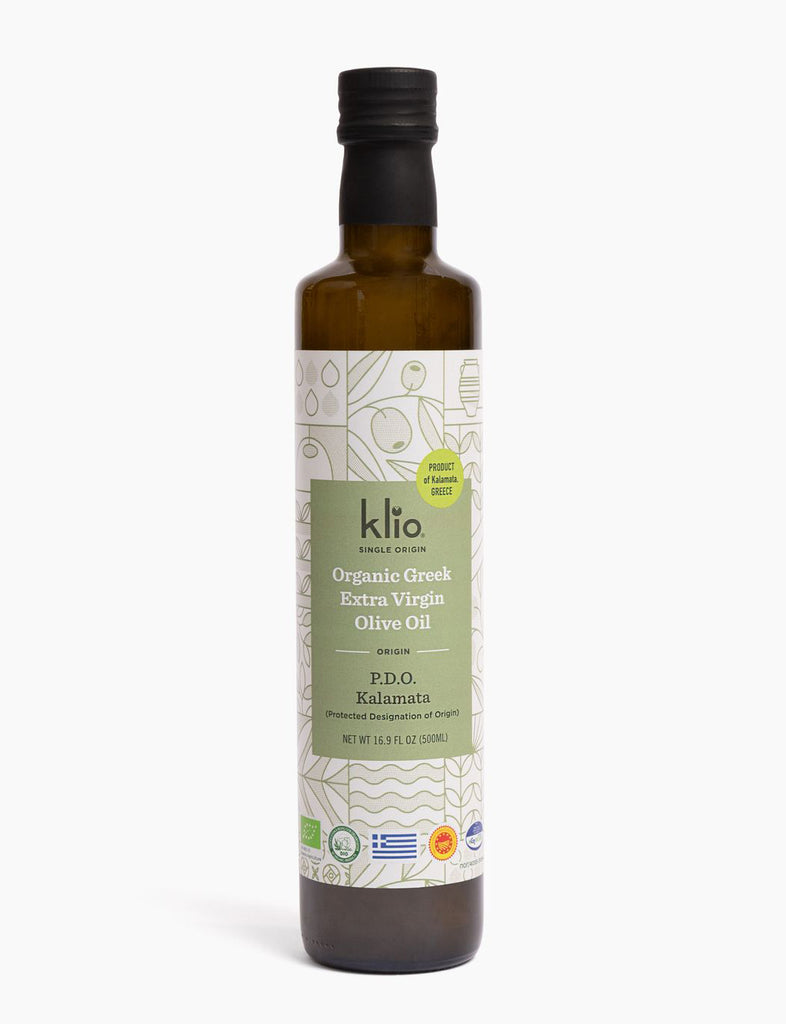

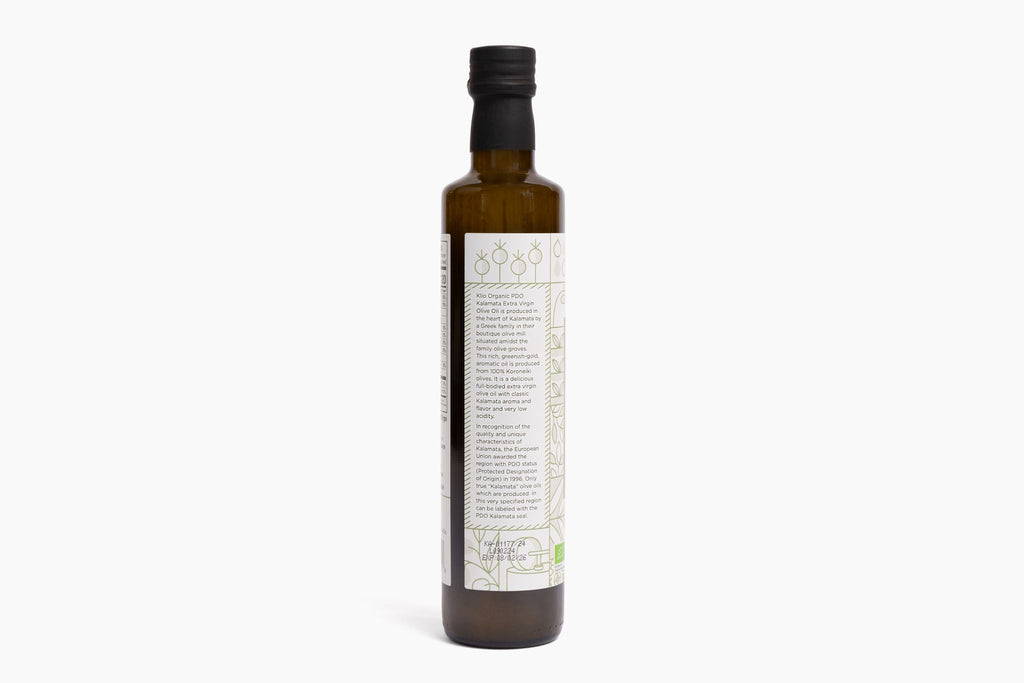

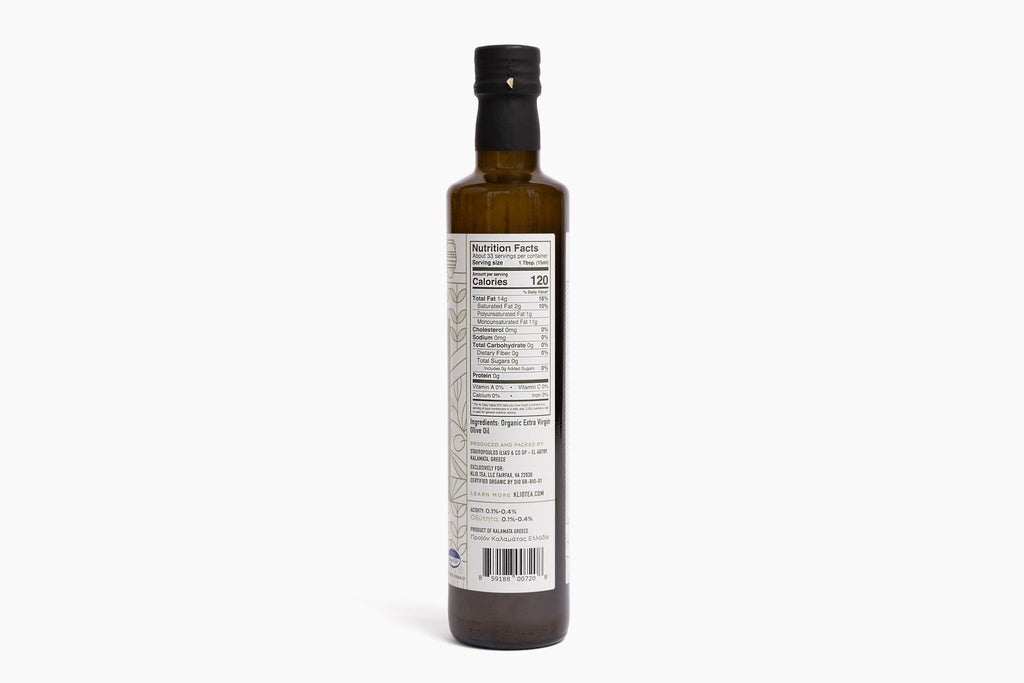

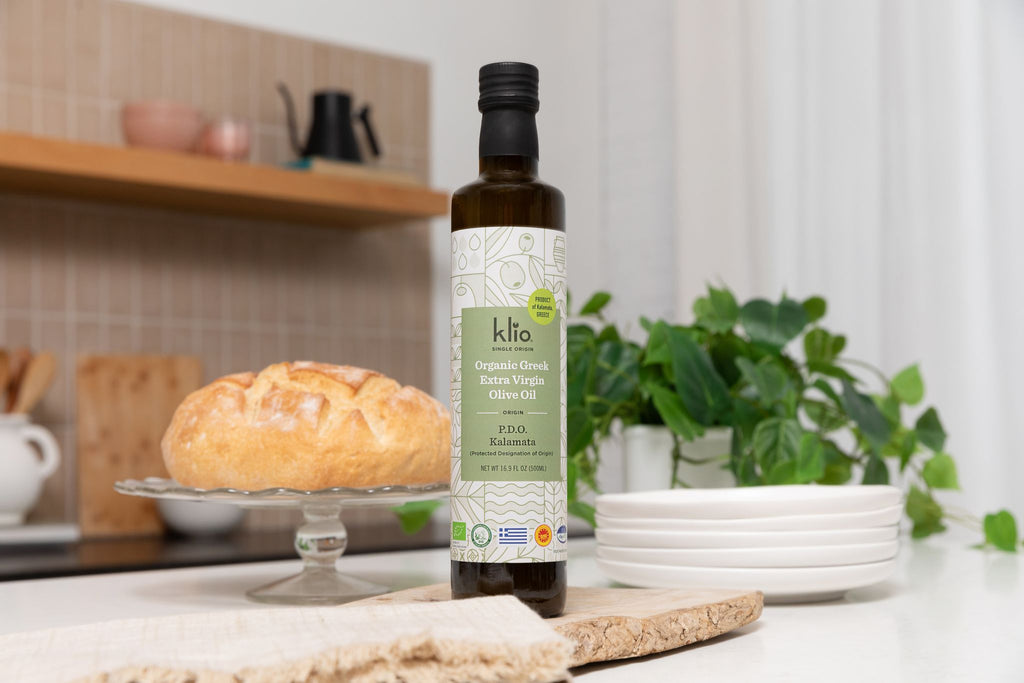

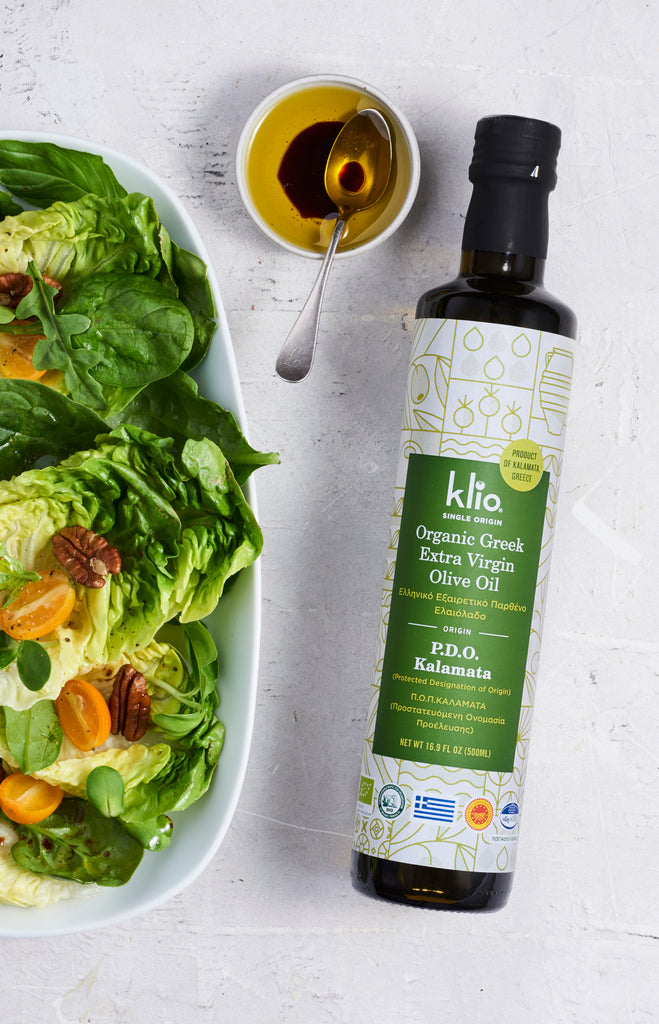

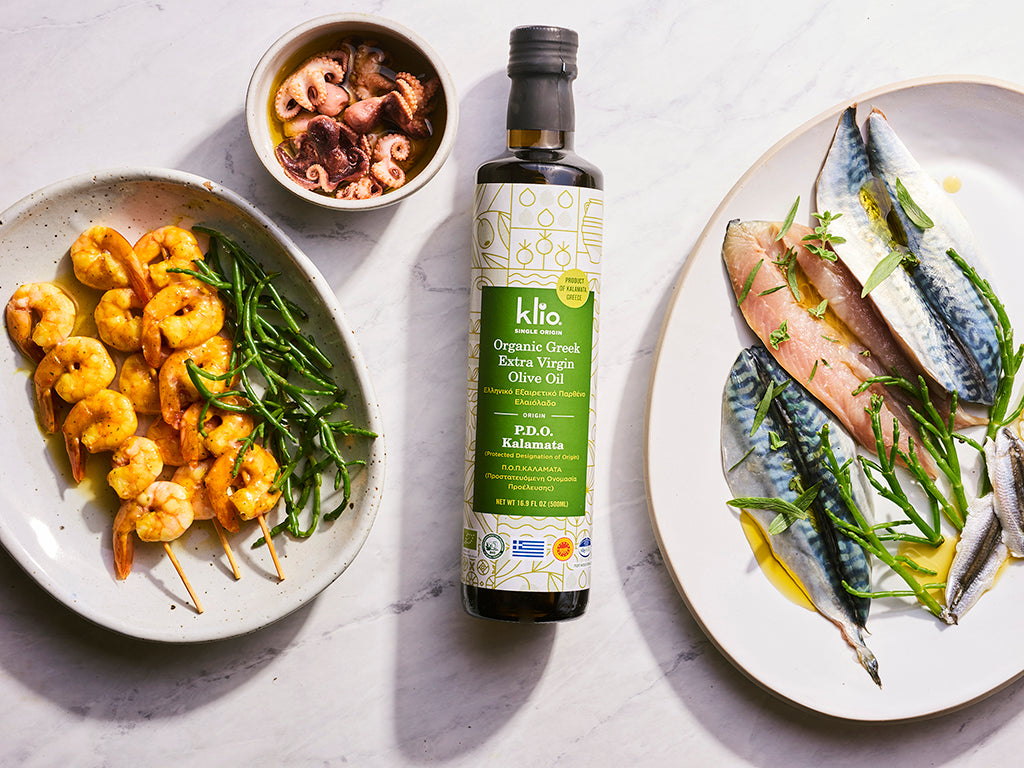

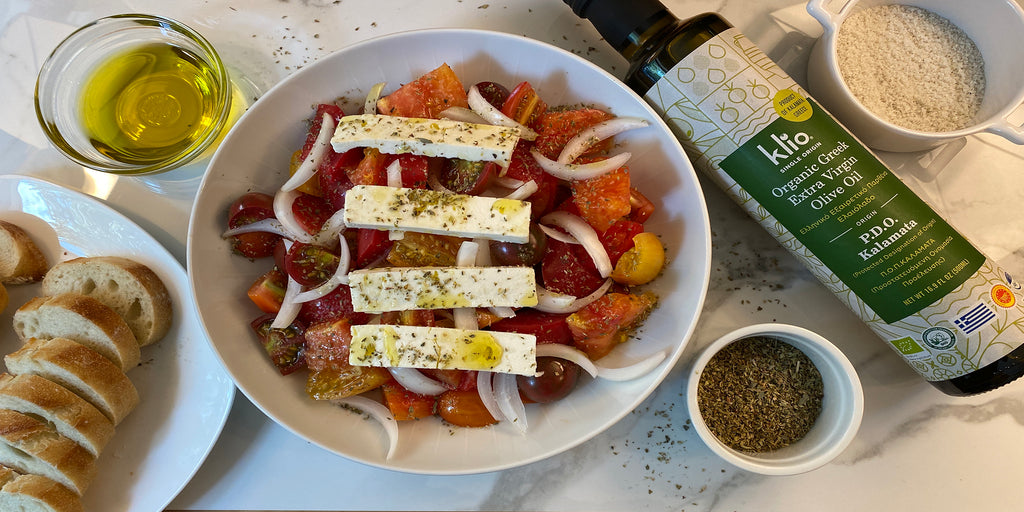
Klio Organic Extra Virgin Olive Oil
- Extra-Virgin
- Cold-Pressed
- High Polyphenol (658 mg/kg)
- Low Acidity (3.2%)
- Certified PDO - Kalamata, Greece
- Certified Organic - EU & USDA
From the famous olive growing region of Kalamata, on the Southern Peloponnese of Greece! The EU officially recognized Kalamata in 1996 as a geographical area that warrants its prestigious "Protected Designation of Origin (P.D.O.)" status. Our EVOO is certified PDO Kalamata by Agrocert, which means the olives were grown in Kalamata and the oil was pressed and bottled in Kalamata. Our EVOO also has to meet the stringent production standards governed by the PDO designation. This includes minimal time allowed between harvesting the olives and pressing them. Kalamata PDO standards are among the most stringent PDO standards in the world.
This delicious high-polyphenol, low-acidity, extra-virgin cold-pressed organic olive oil is a superior-quality heart-healthy staple. It is cold-pressed from 100% Koroneiki olives on the day of harvest which results in excellent acidity levels (0.32%). It has a beautiful olive aroma and an exquisite flavor. It is very high in polyphenols (658 mg/kg) - 2.6x the level that the EU requires for an EVOO to make a heart health claim.
It is produced exclusively for Klio by a small family operation in Kalamata (a father and three daughters).
Our olives are cold-pressed on the day of harvest to ensure the quality and freshness of our oil and comply with P.D.O. (Π.Ο.Π.) requirements.
We package our olive oil in a dark glass bottle to protect it from light; we also use a large label that covers most of the bottle to provide additional protection. Exposure to light and high temperatures can degrade olive oil. Prior to arriving at your home it is stored in a dark, cool environment.
Store unopened bottles in your pantry or a cabinet. Opened bottles (which should not last long!) can be left on the counter but keep away from sunlight and your range.
- Harvest and Pressing: Mid - November 2025
- Best Before: March 2028
- Polyphenol Analysis
- Acidity Analysis